Beyond the Mic: 5 Critical Questions to Ask Before Renting a Podcast Studio
In the current content landscape, audio is only half the battle. With the dominance of YouTube and social clips, the visual component of your podcast is just as critical as the audio quality.
While you can record a podcast in a spare bedroom or a budget rental booth, there is a massive difference between a “room with a microphone” and a professional podcast production facility.
If you are hosting C-suite executives, celebrities, or key stakeholders, the infrastructure of the video production studio matters. It impacts the comfort of your guests, the flow of the conversation, and ultimately, the perception of your brand.
Before you book your next session, look past the gear list and ask these five questions to ensure the studio has the infrastructure to support a broadcast-quality production.
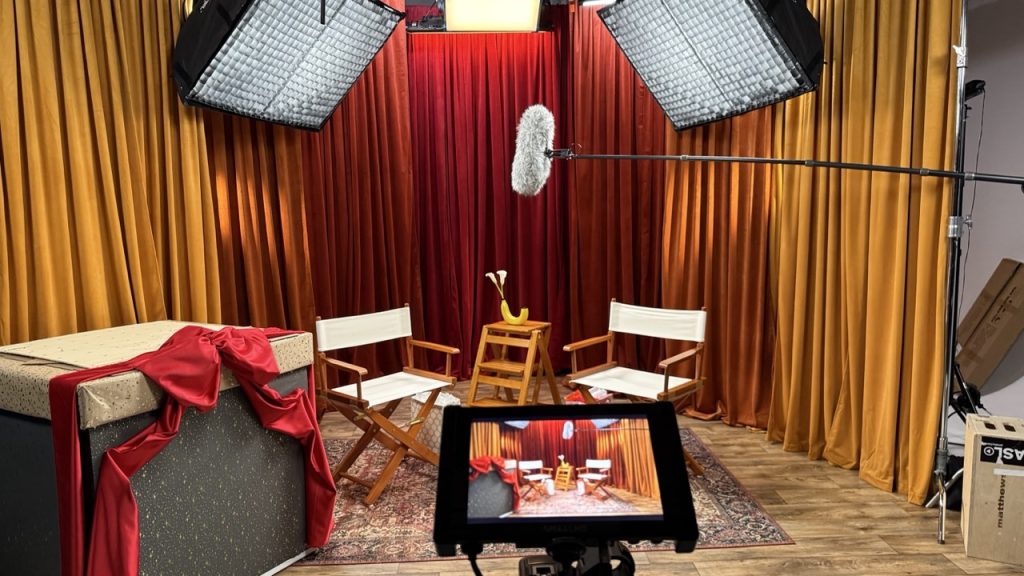
1. “Is the set customizable, or will I look like everyone else?”
Why you should ask: A quick scroll through YouTube reveals a sea of sameness: brick walls, neon signs, and generic bookshelves. If you are building a brand, you don’t want your content to look indistinguishable from the podcast recorded in the slot before yours.
What to look for: A professional facility should offer modularity. You shouldn’t be forced into a rigid visual box. Ask if they offer:
Customizable background lighting: Can they match your brand colors?
Furniture options: Do they offer choices between formal board-room style tables, relaxed club chairs, or modern aesthetics?
Set building capabilities: If you have a bigger budget, can the studio accommodate a custom-built set?
At ASL Productions, our Studio One is a massive 24’ x 22’ space designed for custom set builds, while Studio Two offers plug-and-play video podcast setups that can be tailored to your specific brand aesthetic.
2. “How do you handle remote guests?” (The Eye-Contact Test)
Why you should ask: Hybrid recording (one person in the studio, one person remote) is the industry standard. However, in many basic studios, the “remote setup” involves the host looking down at a laptop screen while talking. This breaks eye contact with the camera and creates a disconnected viewer experience.
What to look for: Ask about their video infrastructure. A high-end studio will use teleprompters or “Intelitron” style monitors placed directly in front of the camera lens. This allows the host to look at the remote guest while simultaneously looking into the lens, maintaining that critical connection with the audience.
3. “Is there a dedicated control room, or is the engineer sitting next to me?”
Why you should ask: Privacy and focus are essential for a great interview. In lower-tier rentals, the audio engineer is often sitting in the corner of the same room, monitoring levels. This can make guests feel self-conscious and creates noise pollution (mouse clicks, chair squeaks).
What to look for: True professional infrastructure requires sound separation. Look for a studio that features a dedicated Control Room. The crew should be behind glass or monitoring via video feeds, communicating with the talent via a professional talkback system (IFB). This creates a “safe bubble” for the talent to perform without distractions.
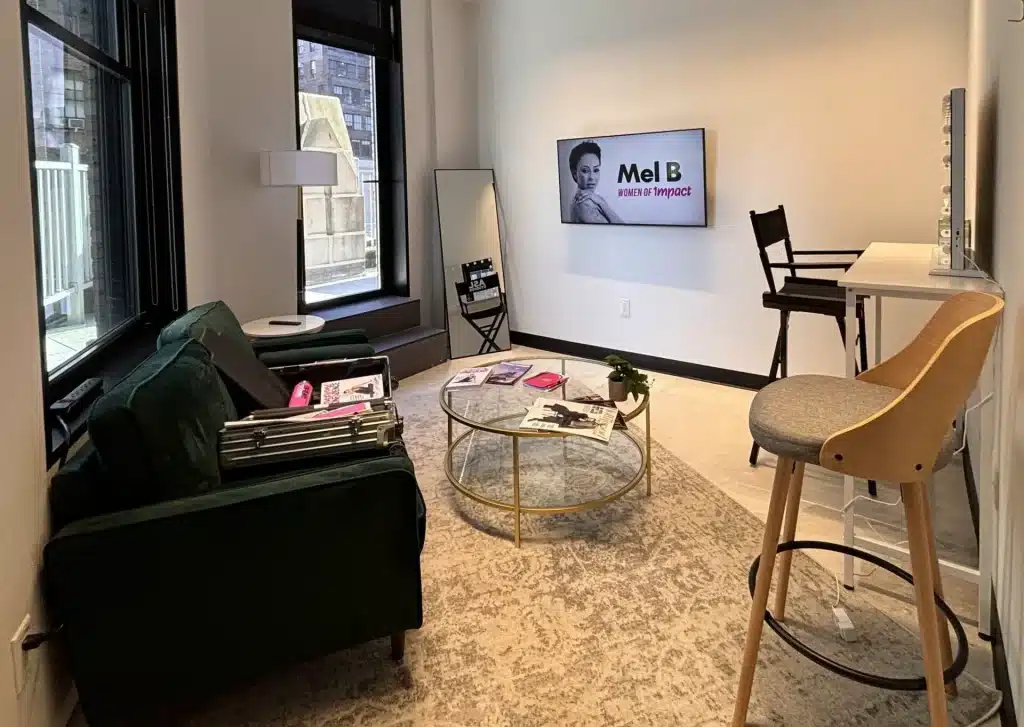
4. “Do you have the amenities to host VIP talent?”
Why you should ask: If you are interviewing a CEO or a high-profile influencer, asking them to wait in a hallway or change in a public restroom is a dealbreaker. The “production experience” starts the moment the guest walks through the door.
What to look for: Ask about the facility’s footprint beyond the recording booth.
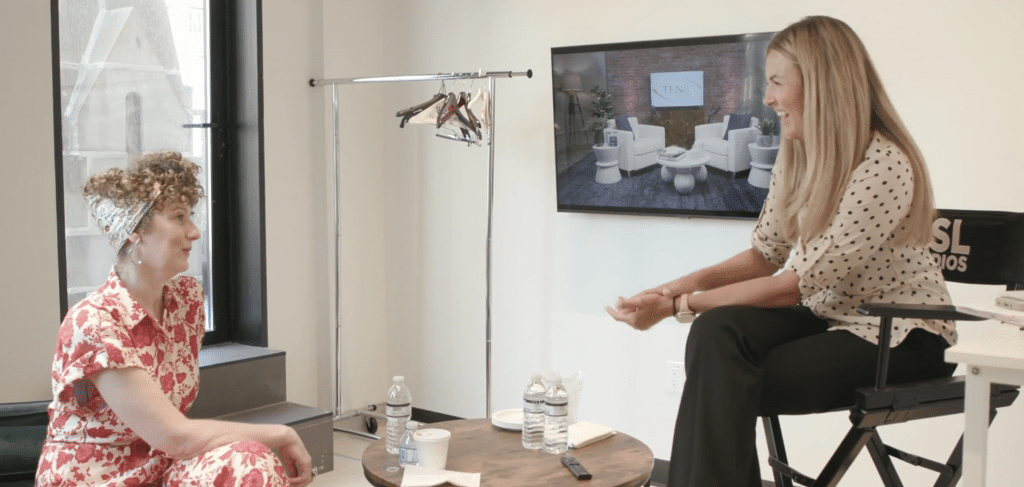
Is there a Green Room? A private space for talent to relax and prep is non-negotiable for high-end productions.
Is there a Hair & Makeup suite? Ensuring everyone looks camera-ready requires proper lighting and mirrors, not just a bathroom sink.
Client Viewing Areas: If you have agency reps or stakeholders attending, is there a comfortable space with monitors where they can watch the recording live without crowding the set?
ASL Productions creates a VIP experience with dedicated makeup suites, private bathrooms, and client lounges equipped with amenities to keep everyone comfortable.
5. “Am I renting a room, or hiring a partner?”
Why you should ask: Some studios are strictly “self-service”. They give you a door code and you’re on your own. If a memory card corrupts or a mic starts buzzing, you have no support.
What to look for: For professional output, you need full production support. Ask if the rental comes with:
A dedicated Account Manager to handle logistics.
On-site technical staff to manage lighting, audio, and video files.
Post-production services (editing, color correction, audio mixing) if you need a turnkey solution.
Summary
When your brand reputation is on the line, the cheapest hourly rate often leads to the most expensive headaches. By asking these questions, you ensure that you aren’t just paying for a microphone, you are investing in a professional infrastructure designed to make your content look and sound its absolute best.
A general rule of thumb for professional studio rentals is to book 2x the amount of time you intend to record. If you are recording a one-hour episode, book two hours of studio time. This accounts for load-in, hair and makeup touch-ups, mic checks, and a stress-free load-out.
ASL Studios · The Many Looks of Studio One Every week someone walks into Studio One and asks the same question: “wait, this is the same room from that other shoot?” It is! Studio One is our largest and most versatile space, and its whole job is to never look like itself twice. A white-out […]
Going Vertical at Fanatics Fest: Building TikTok Shop Collectibles’ Feed with Viral Vision
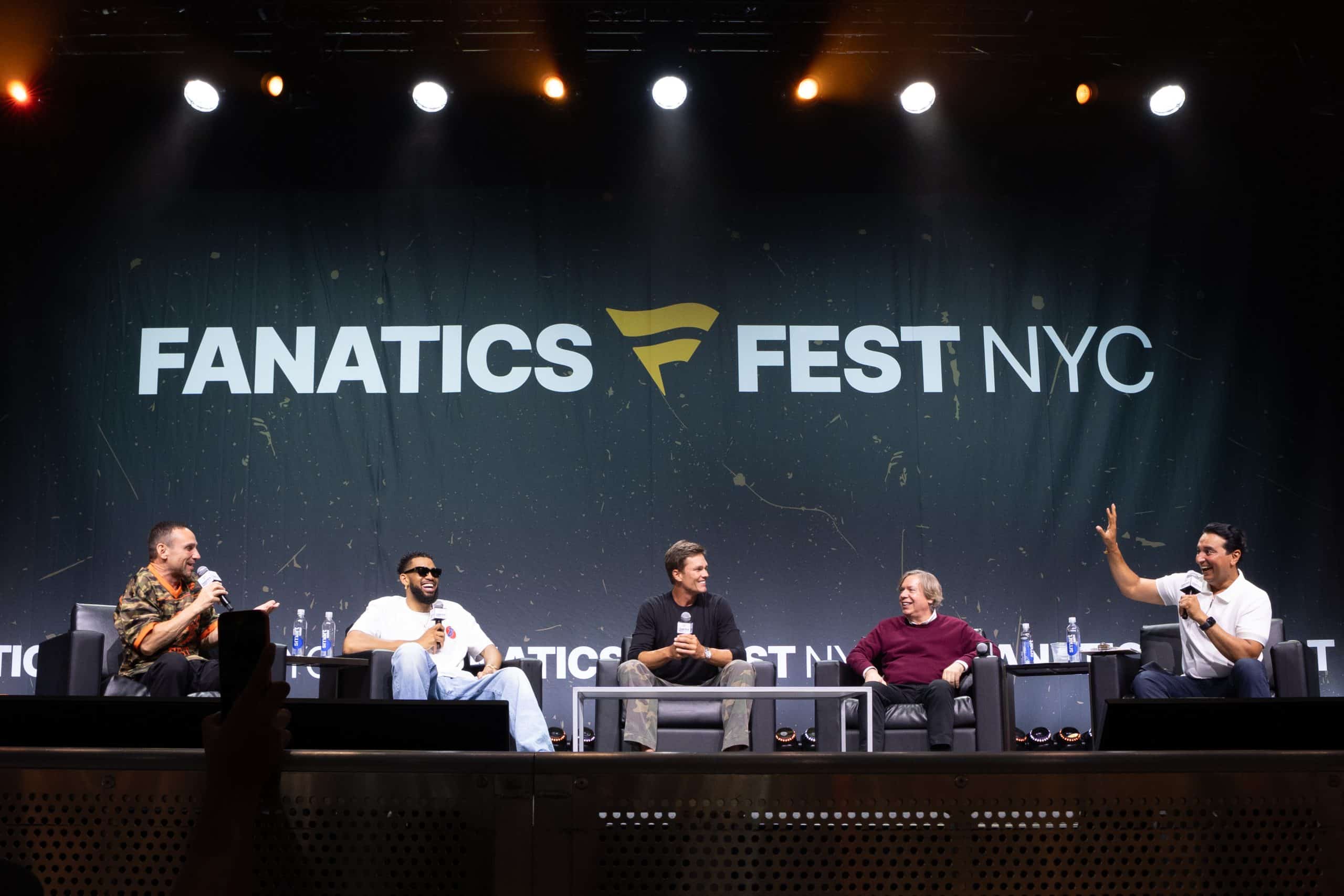
Case Study · Fanatics Fest 2026 · With Viral Vision This July, Fanatics Fest took over the Javits Center for four days of sports, culture, and collecting. Tens of thousands of fans, hundreds of athletes and creators, and seemingly every card, slab, and jersey on the planet under one roof. Our partners at Viral Vision, […]
NYC Webinar Studio: Branded, Multi-Cam, Multi-Destination Webinar Production
Anyone can open a laptop and start a video call. That is not a webinar. A real webinar production looks like a broadcast: a branded set, multiple cameras, programmed lighting, clean audio, live graphics, and a technical producer or team in the control room running the cameras, audio and stream. From our NYC webinar studio […]