
Onboarding | Compliance | Technical | Leadership
Corporate training video production is the process of creating video content that teaches employees, contractors, or partners a specific skill, process, or standard. Well-produced training video shortens time-to-competency, reduces reliance on live instruction, and delivers a consistent baseline across large, distributed workforces. ASL Productions has produced corporate and staff training video for national brands, including ADP and Hilton, since 2007, filming onboarding curricula, compliance modules, and technical instruction across 47+ U.S. markets and our 7,500 sq ft Midtown Manhattan studio.
In nearly two decades running ASL Productions, we’ve seen more corporate training video budgets get blown by trying to cover too much in a single video than by any other cause. The most effective training video we produce, whether it’s a five-minute compliance refresher or a 20-episode onboarding series, is short, specific, and structured around one thing an employee should be able to do differently after watching. This page walks through the training video categories we produce, the industries we serve, and how a production actually runs from first call to LMS-ready delivery.

Onboarding video introduces new hires to your company, role, systems, and culture in a repeatable way. The best onboarding programs we’ve produced are structured as short modular episodes, company overview, benefits, systems tour, meet-the-team, first-week logistics, rather than a single 45-minute video no one finishes. For Hilton, we produced staff training video covering how to work with clients, handle service issues, and escalate problems appropriately. Modular design also makes updates easier: when your process changes, you replace one three-minute episode, not the whole video.
Compliance training video covers HR requirements (harassment prevention, code of conduct), safety training (OSHA, industry-specific), ethics, and regulatory content. Companies move compliance content from slide decks to video for three reasons: consistency across offices, a clear audit trail of completion, and higher retention than static training. For regulated industries, compliance video also serves as documented evidence of training delivery during audits.
Technical training video teaches employees or clients how to operate specific equipment, follow a workflow, or execute a process. This is where video pays back fastest: what takes eight hours of live instruction can often be delivered in a 20-minute video that a new hire can rewatch on demand. For ADP, we produced app walkthrough and product-training video for their client end users, including large retail clients, teaching them how to navigate the ADP platform and get the most from it. The production combined 2D animation, stock footage, live-action, and screen capture. The emphasis here is clarity over polish: screen recordings, close-ups on equipment, and unambiguous step-by-step narration matter more than cinematic look.
Leadership and manager development video is the fastest-growing category we produce. A common use case: recording a well-scripted executive messaging video series from executives that gets distributed to new managers globally, ensuring every promoted manager hears the same framework the same way. This is video as scale multiplier, reaching thousands of managers with content that would otherwise require flying executives to regional workshops.
Pharmaceutical training video operates under FDA validation requirements when it’s used for GxP (Good Manufacturing, Laboratory, and Clinical Practice) training. Life sciences training video also has to work in facilities with strict access and confidentiality requirements, much of our pharmaceutical work is filmed under NDA with limited crew and pre-approved shot lists.
Technology training video ranges from highly technical R&D documentation to enterprise software rollout training. What matters most in this vertical: technical specificity, respect for confidentiality around unreleased products, and the ability to produce video quickly enough to keep pace with product cycles. Working with in-house engineering subject-matter experts, not just marketing teams, is essential, the credibility of technical training rests on the accuracy of the SME on camera.
Industrial and manufacturing training video is heavily weighted toward safety, equipment operation, and standard operating procedures. This work is almost always filmed on-site, the training has to reflect the actual environment employees will work in. Our national crew network makes this vertical viable across facility footprints, whether it’s a single plant or 30 sites across multiple states.
Hospitality and client-facing training video is about consistency: every employee handling a guest or client interaction should be working from the same standard. For Hilton, we produced staff training covering client interaction, problem handling, and escalation procedures. This is scripted, scenario-driven training built around realistic situations employees actually face.


Every training video project follows the same four phases: discovery, script, production, and post. The specifics differ by category, an interview-driven leadership series looks nothing like an equipment demo, but the phase structure holds.
Discovery is where we figure out what the video actually needs to do. Standard questions: who is the audience, what should they be able to do differently after watching, what existing materials can we build from, what LMS platform will host the final deliverable, and what compliance frameworks apply. The deliverable at the end of discovery is a production brief that names the specific learning outcomes and the video format that fits them.
Script work varies dramatically by video type. Onboarding modules are usually narrated with light on-camera segments; leadership video is often interview-driven with minimal scripting; compliance video is heavily scripted with legal review built in. For regulated industries, we build legal and compliance review cycles into the script phase, retrofitting compliance-approved language into a finished video is much more expensive than getting it right upfront. Storyboards get built in parallel for anything with visual complexity: screen recordings, animation, or multi-camera on-location shoots.
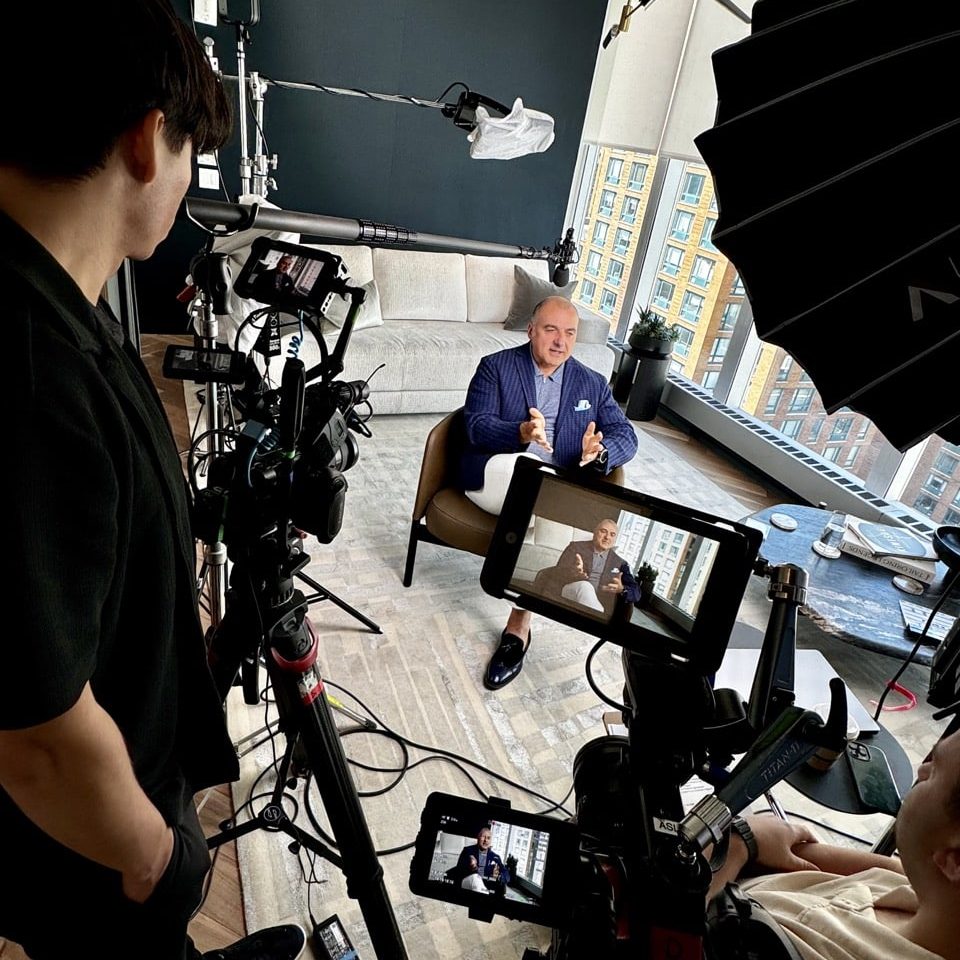
Production runs at our Manhattan studio, at client facilities, or on-location depending on the project. Our 7,500 sq ft studio at 320 W 37th Street handles the majority of interview-based training video, two soundproof stages, an adjacent control room, and green room space for talent prep. Field production draws from our national crew network, keeping consistency across shoots in different cities. Multi-day training productions often benefit from same-day cutdowns for review, we can deliver rough cuts of key segments within 24 hours of the shoot day.
Post-production timelines depend on complexity. A straightforward interview-based module takes two to three weeks from shoot wrap; a heavily animated technical training module can take six to eight weeks. Standard deliverables include the master video in multiple formats (MP4 for LMS integration, higher-bit-rate masters for internal archives), open and closed captions, chaptered navigation for LMS platforms that support it, and any short-form derivatives for internal comms channels. We deliver in SCORM package format when the LMS requires it.
“Training videos are a great way for a company to get information out quickly to their clients, employees and partners. We love diving into what makes a company great and how to best provide clear and concise information on time and under budget.”
Adam Lebenstein, Founder & Executive Producer
These projects are backed by our national crew network. Detailed case studies for these projects are in production, each will link from this section when live:
Shorter than most training teams think. The most effective training video we produce is 3 to 8 minutes per module. A 45-minute training video isn’t watched all the way through, a modular series of ten four-minute videos usually delivers better completion rates and better retention. When a topic genuinely requires more time, break it into a series with clear chapter navigation.
Training video is the video component. eLearning typically wraps video into an interactive experience with quizzes, branching scenarios, and completion tracking hosted on an LMS. ASL produces the video component; clients or their eLearning partners handle the LMS integration, quizzing, and interactivity layer. We deliver in formats that plug directly into standard LMS platforms including Cornerstone, Workday Learning, Docebo, and SAP SuccessFactors.
Both work for different reasons. Filming at your office means the training video reflects the actual environment employees work in, which matters for equipment operation, facility tours, and process documentation. Studio filming works better for talking-head interviews, leadership messages, and any content where a consistent, controlled visual look matters. Most of our training video projects use both, office or facility filming for context, studio filming for structured segments.
Modular design at the script phase is the answer. When training video is built as short single-topic modules rather than one long video, updating a procedure means re-filming one module instead of the whole program. We deliver source files organized for straightforward re-cutting and maintain project files for at least three years so revisions don’t require re-shooting.
Two things. First, we’ve produced corporate training video for national brands including ADP and Hilton since 2007, training video isn’t a category we occasionally do, it’s a category we know deeply. Second, our national crew network means the same client contact and same production quality across shoots in every U.S. market, without the coordination cost of hiring a different vendor in each city. For distributed training programs across dozens of offices, this is often the deciding factor.
Standard deliverables include MP4 (H.264) for the master video, WebM for browser-based LMS platforms, SCORM package format when required, closed captions in VTT and SRT formats, and chaptered navigation markers where the LMS supports them. If your LMS has specific requirements we haven’t listed, we handle format conversion in post, send us the spec and we deliver to it.
Tell us about the audience, the topic, and the deployment platform. We turn around production quotes within a business day of a 20-minute discovery call.